The Dartboard Explained: Sections, Scoring, and Game Strategy


The Dartboard Explained: Sections, Scoring, and Game Strategy
Darts is a game that blends precision, strategy, and mental focus. Whether you’re playing casually at a local bar or following professional tournaments, understanding the dartboard is essential to improving your performance. This article breaks down the structure of the dartboard, the scoring system, and the strategies that can help you gain an edge over your opponents.
The Structure of the Dartboard
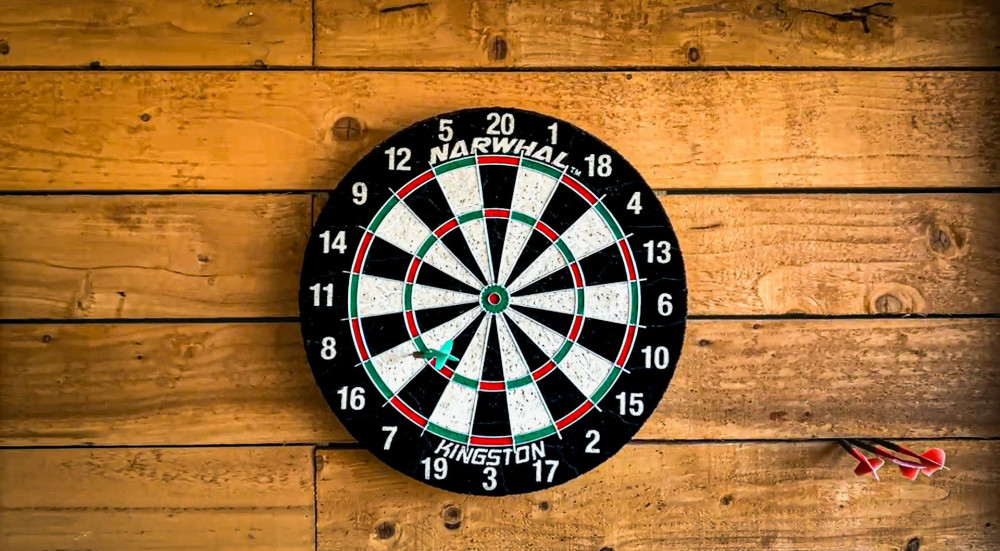
A standard dartboard is divided into 20 numbered sections, each representing a score value from 1 to 20. The numbers are arranged in a specific order designed to penalize inaccurate throws. For example, the high-value 20 section is flanked by 1 and 5—so a small miss can cost you valuable points.
The board is further divided into several scoring zones:
- Single area: The large section between the colored rings. Hitting here earns you the face value of the number.
- Double ring: The thin outer ring. A dart here doubles the section’s value.
- Triple ring: The thin middle ring. A dart here triples the section’s value.
- Bullseye: The center of the board. The outer bull (single bull) scores 25 points, while the inner bull (double bull) scores 50 points.
The dartboard is evenly balanced, with no “easy” side. Skilled players learn to use the entire board strategically, depending on their strengths and the game situation.
The Scoring System
In most standard games, such as “501,” each player starts with 501 points. The goal is to reach exactly zero, but the final dart must land in a double section. This rule adds a layer of strategy, as players must plan their throws to leave a finish that can be completed with a double. For instance, 40 (double 20) is a classic finishing target.
Each time you hit a section, the corresponding points are subtracted from your total. For example, hitting triple 20 scores 60 points, reducing your total accordingly. If you score more than you have left—known as “busting”—the turn doesn’t count, and your score reverts to what it was before that round. This makes accuracy and calculation crucial, especially in the final stages of a game.
Læs også:




Strategy and Tactics
While darts may seem simple, it’s a game of deep strategy and mental discipline. Professional players think several throws ahead and adjust their approach based on the score and their opponent’s position.
1. Master Your “Checkouts”
Finishing a game efficiently is one of the most important skills in darts. Players memorize specific combinations—known as checkouts—that allow them to finish from various totals. For example, a 170 finish can be achieved with triple 20, triple 20, and bullseye. Knowing these combinations helps you stay composed and confident under pressure.
2. Play to Your Strengths
Not every player excels at the same targets. Some are more consistent on triple 19 than triple 20. The key is to identify the sections you hit most reliably and build your strategy around them. It’s often better to score a steady 57 than to miss 60 repeatedly.
3. Maintain Rhythm and Focus
Consistency in darts comes from rhythm and concentration. A smooth, repeatable throwing motion and a calm pace help maintain accuracy. Many players develop pre-throw routines—small rituals that help them focus and stay mentally grounded.
4. Think Defensively
In competitive play, strategy isn’t just about scoring—it’s also about managing risk. If you’re ahead, it can be smarter to aim for safe singles or doubles rather than risky triples. Conversely, if you’re behind, taking calculated risks might be your best chance to catch up.
Equipment and Maintenance
A quality dartboard is typically made from sisal fibers, a natural material that self-heals when darts are removed. To extend its lifespan, rotate the board regularly so that the numbers wear evenly. Your darts also need care: replace worn flights, straighten bent tips, and ensure the weight and grip suit your throwing style.
The Mental Game
Darts is as much a mental challenge as it is a physical one. A single poor throw can shift the momentum of a match, so staying calm under pressure is vital. Many players use breathing techniques or visualization to maintain focus, especially during high-stakes moments.
From Bar Game to Professional Sport
What began as a casual pub pastime has evolved into a global sport with televised tournaments and passionate fan bases. Professional players like Michael Smith and Peter Wright have brought flair and precision to the game, inspiring new generations of players. But whether you’re competing in a league or just playing for fun, understanding the dartboard is the first step toward mastering the art of darts.
Læs også: